Ten traditions, one table
MYTH is a card game in which ten of the world's mythologies are told side by side, each in its own words and its own craft. This is where to read them.
Meet the ten traditionsTen traditions. 2,500 cards. Each set drawn in a craft of its own culture.
The Table
Wherever two people sit down with stories, there is a table. Nobody built it. Nobody owns it. It has been a mat, a doorstep, a bench by the stove: any place where someone said listen and someone else stayed.
In MYTH there is a fire on either side of it. Each fire is a Hearth, and it belongs to a teller, not to a people. Between the fires lies the Middle, where the stories happen: a well, a hill, a river mouth, a ford. Keep a place to the end of a chapter and it gives a boon, a gift, a teaching, a thing made. A boon counts only when someone carries it home down the Road.
Some names are not brought to the table as figures at all. People go to them still, in their own places and their own ways. Here you meet only the place, the event, the blessing.
Every tradition is told in its own words. None speaks for another, and none loses anything here. When the evening ends, every story goes home whole, to be told again.
What the table never does
- It never ranks the traditions. They appear here in the order of their set codes, which says nothing about age or worth.
- It never merges gods. Every figure stays inside its own tradition's story.
- It never makes a people lose. When one card defeats another, two tellings have met on the same evening.
- It means to show a worshipped figure only as places, events and blessings. Where a review finds one still set as a playing piece, that card is being changed.
Ten traditions
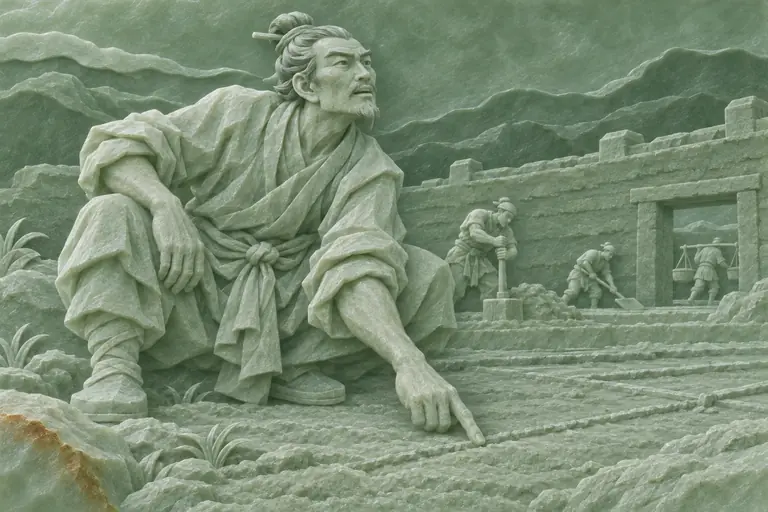
Each set is drawn in one craft of its own culture, so the material is part of the telling.
-
Aztec / Mexica
Coming soon
This tradition's page opens once its consultation and final review are complete.
-
Chinese
Mountains, Seas and the Mended Sky, set CHN
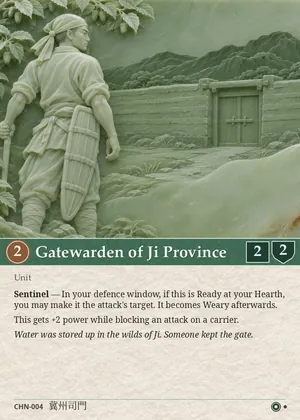
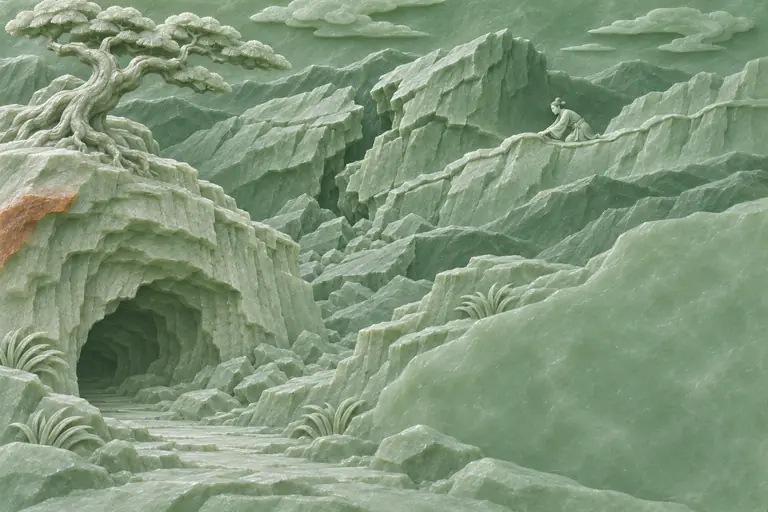
The sky has a hole in it, the flood will not go down, and there are ten suns where there should be one. Someone has to put it right, by hand, and someone pays. Drawn in carved nephrite jade mountain (shanzi).
-
Egyptian
The Scale and the Hall, set EGY
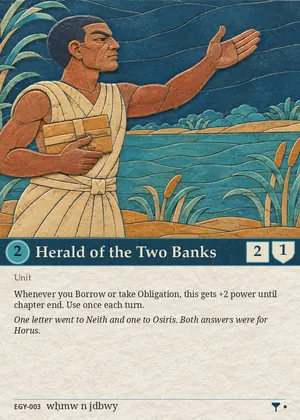
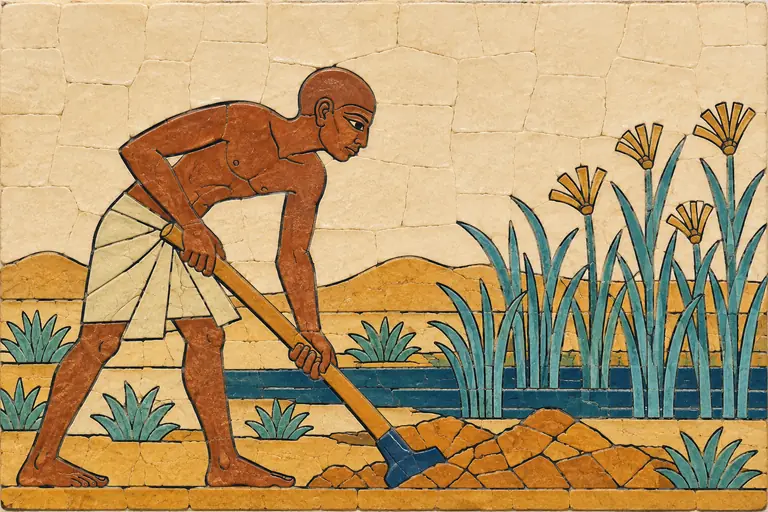
Everything is weighed. The heart against the feather, the claim against the claim. The sun goes down into the night each evening, and each morning it comes back. Drawn in faience tile inlay in limestone plaster.
-
Greek
Labours and Bargains, set GRK
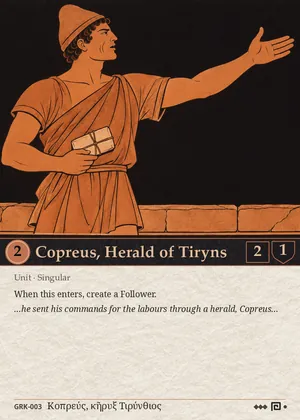
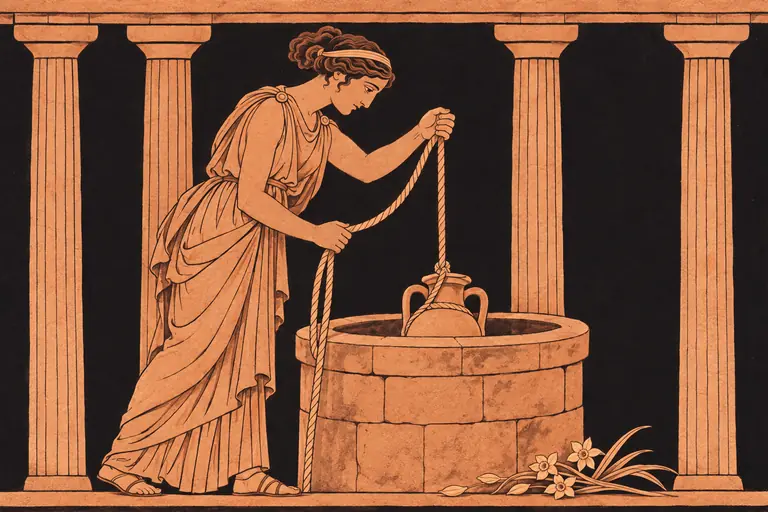
Do the task, then the next one. The gods will name the price afterwards, and you will not get to choose it. Drawn in attic red-figure painting.
-
Inca / Andean
Coming soon
This tradition's page opens once its consultation and final review are complete.
-
Indian
Coming soon
This tradition's page opens once its consultation and final review are complete.
-
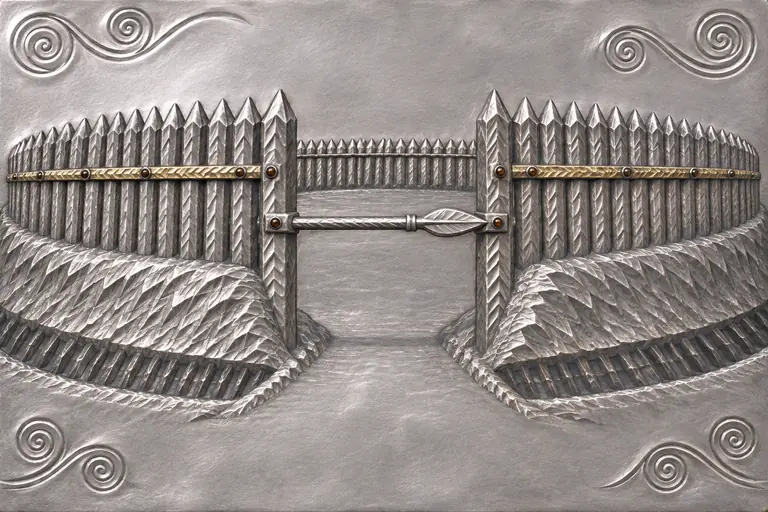
Irish
Geasa and Sovereignty, set IRL
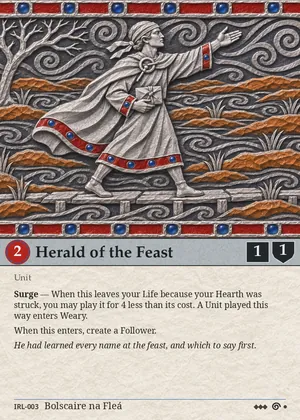
You are stronger than you should be, and there is one thing you must never do. Everyone at the table knows what it is. Drawn in insular silver with gilt bands and studs.
-
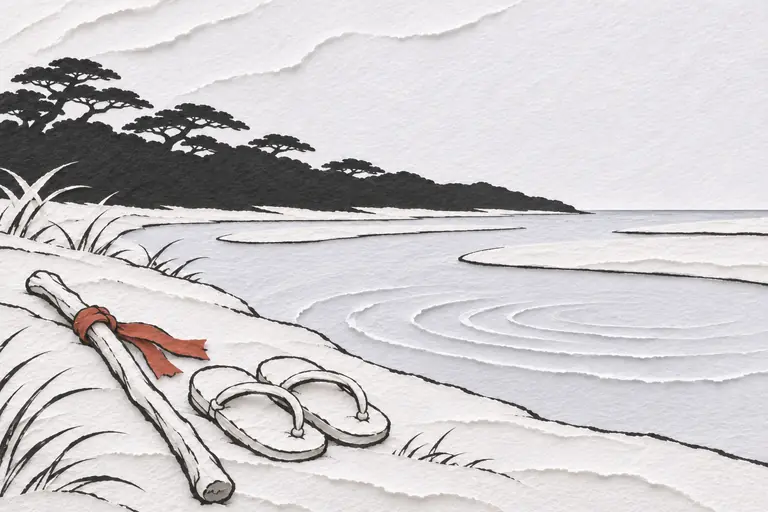
Japanese
The Reed Plain and the Rock Door, set JPN
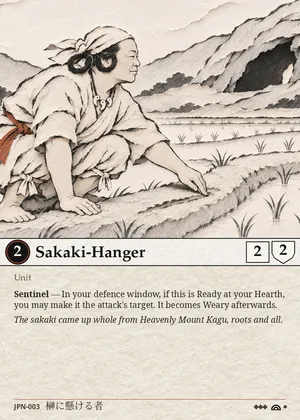
Contact with death and violence leaves a stain, and water washes it away. When the light hides behind a door of rock, it has to be coaxed out, with birdsong, dancing and laughter. Drawn in torn and layered washi with sumi line (chigiri-e).
-
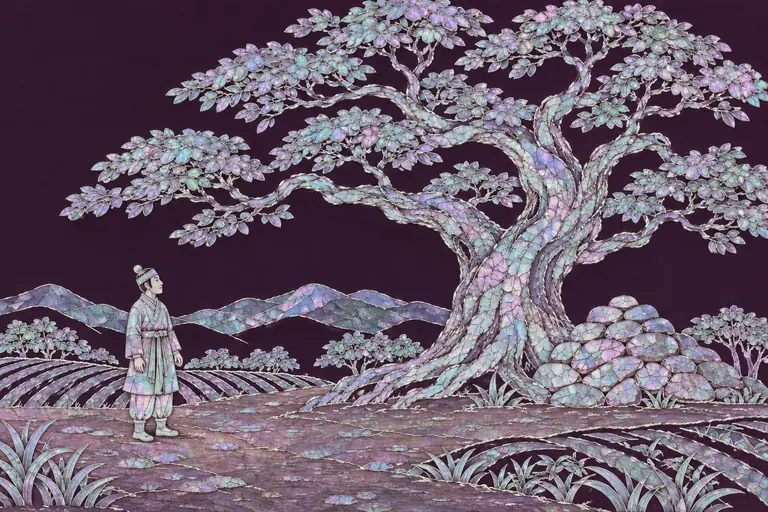
Korean
The Purple Stone, set KOR
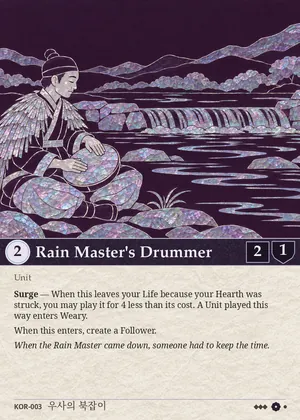
A contest is won by cheating, and the world the winner gets is the worse for it. A bear keeps out of the sun, and the tiger does not. A rope comes down from the sky for the children, and a rotten one for the tiger. Drawn in mother-of-pearl inlaid lacquer (najeonchilgi).
-
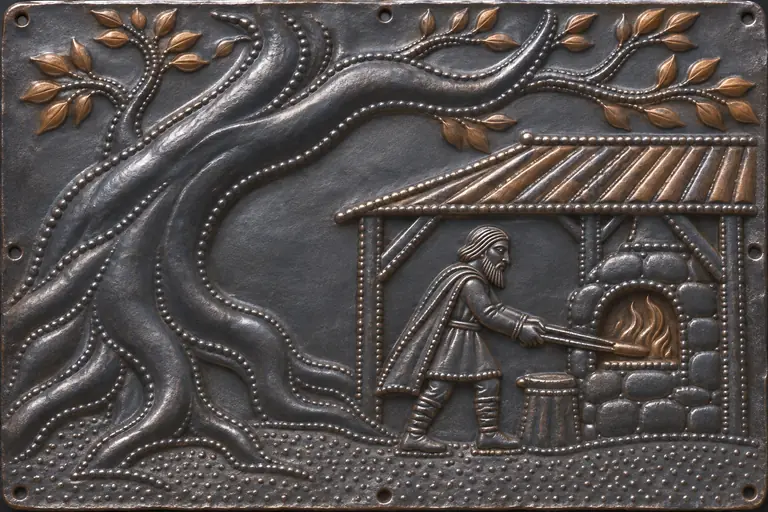
Norse
Knowable Doom, set NOR
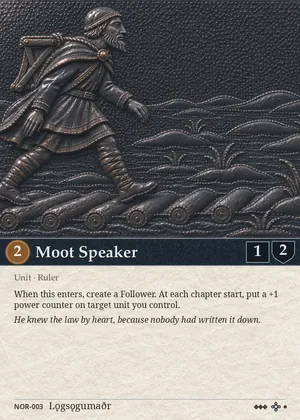
Everyone knows how it ends. The wolf will get loose, the sun will be caught, and the gods will go out to meet the end anyway. Then the earth comes up green out of the sea. Drawn in stamped foil plaques (Vendel-period pressblech).
Base and Gilded
Every card has a Base face, made in its own culture's craft: lacquer and shell for Korea, red-figure for Greece, silver and niello for Ireland, grass cord for the Andes.
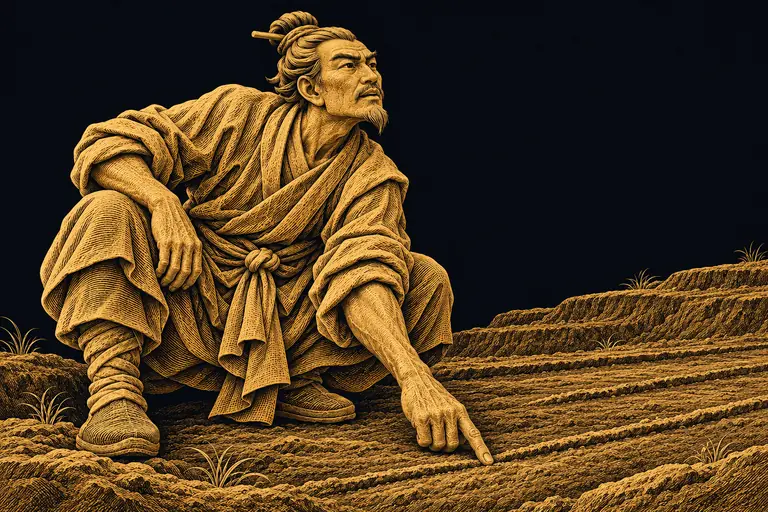
A Gilded card is an engraving: a plate cut in gold line on near-black by someone who wanted to remember an evening's telling. All ten sets share one engraver's hand. Few exist because a plate takes a long time to cut, not because its subject is worth more than any other.
The gold belongs to the engraver, not to the story or the culture. A Gilded card never changes the rules, and the gold adds nothing to the figure it shows.